Oxytocin: The Neurohypophyseal Nonapeptide in Research
Research compounds for laboratory use only · not medical advice
By Vyroval Research Desk — an institutional byline. PubMed-linked sources are checked against their indexed records; how this desk works.
Oxytocin, the nine-amino-acid neuropeptide, and its research in social bonding, oxytocin-receptor pharmacology, stress modulation and CNS signaling.
Oxytocin is both a classical hormone and a modern research topic. Its endocrine roles were established decades ago; its nervous-system research has been one of the busiest areas in behavioral neuroscience since.
The molecule
Oxytocin is a nine-amino-acid peptide with a disulfide bridge (C₄₃H₆₆N₁₂O₁₂S₂, ≈ 1007 g/mol), synthesized in the hypothalamus and released via the posterior pituitary. du Vigneaud’s 1953 synthesis was the first synthesis of a peptide hormone and earned the Nobel Prize — a foundational moment for peptide chemistry.
What the research looks at
- Social-bonding and affiliative behavior — the best-known thread; oxytocin-receptor signaling in social contexts
- Oxytocin-receptor pharmacology — binding and signaling studies for the OXTR
- Stress and anxiety modulation — the peptide’s role in HPA-axis and stress-response research
- CNS peptide signaling — how a neurohypophyseal hormone acts as a central neurotransmitter-like signal
Handling notes
Lyophilized, reconstitute with bacteriostatic water; the reconstitution calculator handles the math. Store at −20°C lyophilized.
See Oxytocin for CAS, purity and full specifications.
For laboratory research use only. Not medical advice.
Last updated September 9, 2026
FAQ
Frequently asked questions
What is Oxytocin?
Oxytocin is a nine-amino-acid neurohypophyseal peptide with established roles in parturition and lactation, and extensive research interest in social behavior and stress.
What research uses Oxytocin?
Social-bonding and affiliative-behavior research, oxytocin-receptor pharmacology, stress and anxiety modulation, and central-nervous-system peptide signaling.
When was Oxytocin discovered?
Its structure and synthesis were established by du Vigneaud and colleagues (1953), who received the Nobel Prize for the first synthesis of a peptide hormone.
References
Selected literature for the compounds discussed
These papers are background literature on the compounds referenced above — they are not citations of this article.
- [1]du Vigneaud V., et al. "The synthesis of an octapeptide amide with the hormonal activity of oxytocin." Journal of the American Chemical Society, 1953.
- [2]Wessells H., et al. "Synthetic melanotropic peptide initiates erections in men with psychogenic erectile dysfunction." Journal of Urology, 1998.
- [3]Ohtaki T., et al. "Metastasis suppressor gene KiSS-1 encodes peptide ligand of a G-protein-coupled receptor." Nature, 2001.
- [4]Yeung A.C., et al. "Chronic subcutaneous kisspeptin-10 stimulates gonadotropin secretion for 12 days in healthy men." Eur J Endocrinol, 2026.
- [5]Simon J.A., et al. "Prespecified and Integrated Subgroup Analyses from the RECONNECT Phase 3 Studies of Bremelanotide." J Womens Health (Larchmt), 2022.
Keep reading
Related articles
Kisspeptin-10: The Kiss1 Receptor Ligand in GnRH Research
Kisspeptin-10, the C-terminal decapeptide of Kiss1/metastin, and its research in reproductive neuroendocrinology, GnRH pulsatility and KISS1R pharmacology.
Melanotan II: The Non-Selective Melanocortin Agonist
Melanotan II, the cyclic α-MSH analog, and its research in melanocortin receptor pharmacology, melanogenesis and appetitive-behavior models.
PT-141 (Bremelanotide): The MC4R-Selective Cyclic Peptide
PT-141 (bremelanotide), the melanocortin-4 receptor agonist derived from Melanotan II, and its research in MC4-receptor pharmacology and neuroendocrine models.
Laboratory tools
Put it into practice
From the catalog
Reference compounds
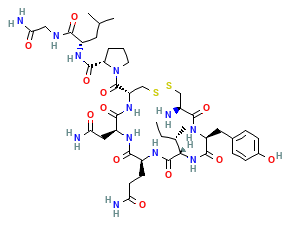
Oxytocin
Neurohypophyseal nonapeptide. Social behavior research.
CAS 50-56-6
Ships in 3–5 days2mg vial · In stock
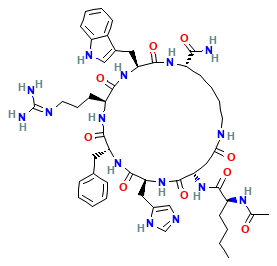
Melanotan II
Non-selective melanocortin agonist. Cyclic peptide.
CAS 121062-08-6
Ships in 3–5 days10mg vial · In stock
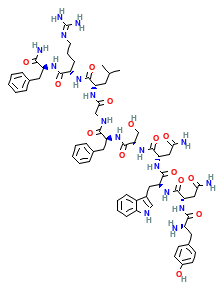
Kisspeptin-10
Kiss1 receptor ligand decapeptide. GnRH research.
CAS 374675-21-6
Ships in 3–5 days5mg vial · In stock
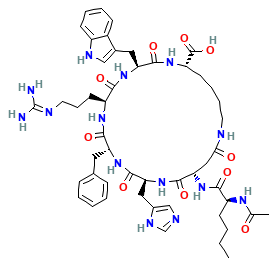
PT-141
Melanocortin-4 receptor agonist. Cyclic heptapeptide.
CAS 189691-06-3
Ships in 3–5 days10mg vial · In stock
For laboratory research use only