VIP: The 28-Residue Vasoactive Peptide
Research compounds for laboratory use only · not medical advice
By Vyroval Research Desk — an institutional byline. PubMed-linked sources are checked against their indexed records; how this desk works.
VIP, the 28-amino-acid neuropeptide of the secretin/glucagon family, and its research in neuroimmunomodulation, vasodilation and VPAC-receptor pharmacology.
VIP was named for what it did to intestinal blood vessels in 1970. Five decades of research later, it is studied across the nervous system, the immune system, and smooth muscle — a reminder that peptide names often capture only the first thing a peptide was found to do.
The molecule
VIP is a 28-amino-acid peptide (C₁₄₇H₂₃₇N₄₃O₄₃S, ≈ 3327 g/mol) belonging to the secretin/glucagon peptide family. It was isolated from small intestine by Said and Mutt (Science, 1970) and named for its vasodilatory activity; the name stuck even as its research scope expanded far beyond blood vessels.
What the research looks at
- VPAC1/VPAC2 receptor pharmacology — VIP acts through two class B GPCRs, a core focus of its signaling research
- Neuroimmunomodulation — VIP bridges neural and immune signaling, a distinctive and active thread
- Vasodilation and smooth muscle — the original research direction, still relevant
- Anti-inflammatory peptide signaling — VIP is studied as an immunomodulatory rather than purely vasoactive peptide
Handling notes
Lyophilized, reconstitute with bacteriostatic water; the reconstitution calculator handles the math. Store at −20°C lyophilized.
See VIP for CAS, purity and full specifications.
For laboratory research use only. Not medical advice.
Last updated September 9, 2026
FAQ
Frequently asked questions
What is VIP?
VIP (vasoactive intestinal peptide) is a 28-amino-acid neuropeptide belonging to the secretin/glucagon family, discovered by Said and Mutt (Science, 1970).
What research uses VIP?
Neuroimmunomodulation, vasodilation and smooth-muscle research, VPAC1/VPAC2 receptor pharmacology, and anti-inflammatory peptide signaling.
What does VIP stand for?
Vasoactive intestinal peptide — named for its original observed activity on intestinal blood vessels, which later broadened into a much wider neuropeptide research field.
References
Selected literature for the compounds discussed
These papers are background literature on the compounds referenced above — they are not citations of this article.
- [1]Said S.I., Mutt V. "Polypeptide with broad biological activity: isolation from small intestine." Science, 1970.
- [2]Schoenenberger G.A., Monnier M. "Characterization of a delta-electroencephalogram(-sleep)-inducing peptide." Proceedings of the National Academy of Sciences, 1977.
- [3]Tukhovskaya E.A., et al. "Delta Sleep-Inducing Peptide Recovers Motor Function in SD Rats after Focal Stroke." Molecules, 2021.
- [4]Medvedev V.E., et al. "[A comparison of the anxiolytic effect and tolerability of selank and phenazepam in the treatment of anxiety disorders]." Zh Nevrol Psikhiatr Im S S Korsakova, 2014.
- [5]Dolotov O.V., et al. "Semax, an analog of ACTH(4-10) with cognitive effects, regulates BDNF and trkB expression in the rat hippocampus." Brain Res, 2006.
Keep reading
Related articles
DSIP: Delta Sleep-Inducing Peptide Research Profile
DSIP, the nonapeptide isolated from cerebral blood, and its research in sleep-wake regulation, stress-response and neuropeptide signaling studies.
Selank: The Tuftsin-Related Anxiolytic Heptapeptide
Selank (Thr-Lys-Pro-Arg-Pro-Gly-Pro) and its research in anxiolytic and nootropic models, serotonin/dopamine modulation and GABAergic signaling.
Semax: The ACTH 4-10 Cognitive Heptapeptide
Semax (Met-Glu-His-Phe-Pro-Gly-Pro) and its research in cognitive enhancement, BDNF signaling, and as a reference compound in peptide-based CNS pharmacology.
Laboratory tools
Put it into practice
From the catalog
Reference compounds
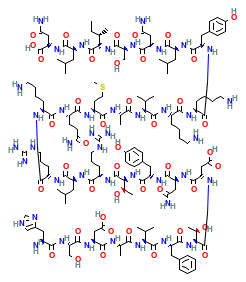
VIP
Vasoactive intestinal peptide. 28aa neuropeptide.
CAS 40077-57-8
Ships in 3–5 days5mg vial · In stock
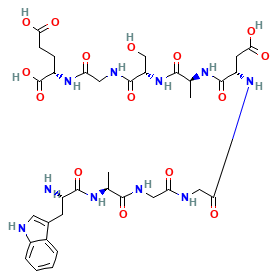
DSIP
Delta sleep-inducing peptide. Nonapeptide.
CAS 34461-88-6
Ships in 3–5 days10mg vial · In stock
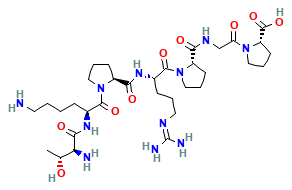
Selank
Anxiolytic heptapeptide analog of tuftsin.
CAS 129954-34-3
Ships in 3–5 days10mg vial · In stock
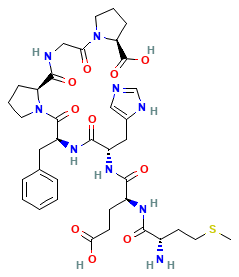
Semax
Nootropic heptapeptide. ACTH 4-10 analog.
CAS 80714-61-0
Ships in 3–5 days10mg vial · In stock
For laboratory research use only