CJC-1295 + Ipamorelin: The GH-Axis Pair
Research compounds for laboratory use only · not medical advice
By Vyroval Research Desk — an institutional byline. PubMed-linked sources are checked against their indexed records; how this desk works.
Why a GHRH analog and a selective secretagogue are stacked, what each contributes at the receptor, and how the two vials' reconstitution math actually works day to day.
The most-referenced peptide stack in GH-axis research is really two molecules doing two jobs — and two vial calculations, not one.
What each half contributes
CJC-1295 (no DAC) is a growth-hormone-releasing-hormone analog — the full 1-29 sequence without the drug affinity complex, studied for its short-acting pulse on the GHRH receptor. Ipamorelin is the selective ghrelin-mimetic pentapeptide on GHS-R1a, known in comparative secretagogue work for a cleaner cortisol/prolactin side profile than the older GHRPs (context in the GHRP-6 guide and the ipamorelin vs HGH comparison).
One raises the release instruction; the other tunes the pituitary’s readiness to obey. That complementarity — not redundancy — is why protocols measure them together.
The daily math, done properly
Each vial gets its own bacteriostatic-water dilution and its own calculator run:
| Component | Vial | At 2 mL BAC | A 10-unit draw carries |
|---|---|---|---|
| CJC-1295 (no DAC) | 2 mg | 1.0 mg/mL | 100 µg |
| Ipamorelin | 5 mg | 2.5 mg/mL | 250 µg |
Use the reconstitution calculator per vial, the U-100 converter for the syringe column. Both peptides ship lyophilized, stored −20 °C cold after reconstitution; handling steps are identical to the single-peptide protocol.
When a fixed blend is acceptable
Wholesale code sheets carry the pair pre-mixed (codes “CJIPA”-style) for convenience vials; the same 1:1-ratio tradeoff discussed in the BPC+TB blend guide applies — locked ratios simplify handling, sacrifice dosing independence.
For laboratory research use only. Not medical advice.
FAQ
Frequently asked questions
Why stack CJC-1295 with Ipamorelin at all?
Two different receptors on one axis: CJC-1295 (no DAC) is a GHRH-receptor analog that raises the release signal; Ipamorelin is a GHS-R1a agonist that primes the pituitary. Studied together because the secretory output depends on both inputs — the pairing has been the default GH-axis stack in research protocols since the mid-2000s.
One vial or two?
In our catalog, two separate vials (2 mg CJC, 5 mg Ipa). Reconstitute each on its own schedule and draw each dose separately; blended 'combo' vials exist in wholesale code sheets but fix the mass ratio, which this stack usually does not want.
Does the DAC version change the math?
Yes, pharmacokinetically: the original CJC-1295 with DAC carries albumin-binding extensions and a much longer apparent half-life — the no-DAC (Mod GRF 1-29) form in our catalog is the short-acting one matched to pulsed dosing.
What do the two reconstitution calculations look like?
Same form, different numbers: vial mass ÷ BAC water volume gives each concentration independently. At 2 mg in 2 mL, CJC reads 1 mg/mL; at 5 mg in 2 mL, Ipa reads 2.5 mg/mL — same 0.1 mL draw carries 100 µg vs 250 µg. The calculator runs both.
References
Selected literature for the compounds discussed
These papers are background literature on the compounds referenced above — they are not citations of this article.
- [1]Teichman S.L., et al. "Prolonged stimulation of growth hormone (GH) secretion by CJC-1295, a long-acting analog of growth hormone-releasing hormone." Clinical Pharmacology & Therapeutics, 2006.
- [2]Raun K., et al. "Ipamorelin, the first selective growth hormone secretagogue." European Journal of Endocrinology, 1998.
- [3]Ranke M.B. "Clinical indications and effects of growth hormone therapy." Best Practice & Research Clinical Endocrinology & Metabolism, 2015.
- [4]National Institute for Health and Care Excellence. Recombinant human growth hormone (somatropin): prescribing information. NICE, 2019.
- [5]Biller B.M.K., et al. "Efficacy and Safety of Once-Weekly Lonapegsomatropin in Adults With Growth Hormone Deficiency: foresiGHt Trial Results." J Clin Endocrinol Metab, 2026.
Keep reading
Related articles
AOD-9604: The hGH Fragment 177-191 Lipolytic Peptide
AOD-9604, the synthetic analog of hGH fragment 177-191, and its research in lipolysis, fat metabolism and growth-hormone fragment pharmacology.
CJC-1295 No DAC (Mod GRF 1-29): The Short-Acting GHRH Analog
CJC-1295 No DAC (Modified GRF 1-29), the tetrasubstituted GHRH analog with DPP-IV resistance, and its research in GH-secretagogue and pulsatility studies.
GHRP-6: The First Selective GH Secretagogue Hexapeptide
GHRP-6, the growth-hormone secretagogue hexapeptide acting at the ghrelin/GHS-R1a receptor, and its research in GH release and receptor pharmacology.
Laboratory tools
Put it into practice
From the catalog
Reference compounds
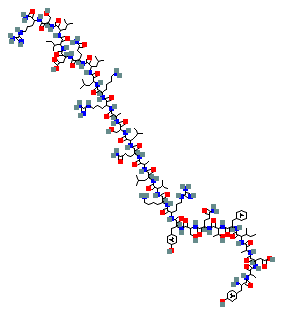
CJC-1295 No DAC
GHRH analog (Mod GRF 1-29). GH secretagogue research.
CAS 863288-34-0
Ships in 3–5 days5mg vial · In stock
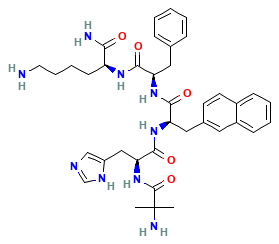
Ipamorelin
Selective GH secretagogue pentapeptide.
CAS 170851-70-4
Ships in 3–5 days5mg vial · In stock
HGH 191aa
Recombinant human growth hormone. Full 191aa sequence.
CAS 12629-01-5
Made to order10IU vial
For laboratory research use only