Peptide Storage and Stability: Vial Handling
Research compounds for laboratory use only · not medical advice
By Vyroval Research Desk — an institutional byline. PubMed-linked sources are checked against their indexed records; how this desk works.
Lyophilized vs reconstituted storage, −20 °C vs 2–8 °C, freeze-thaw effects, and the practical rules that protect expensive research material.
Lyophilized peptides are built to last — that’s the whole reason they’re freeze-dried. But the storage rules shift the moment you add water, and getting that transition wrong is how expensive research material gets ruined.
Dry powder: cold and dry
Lyophilized peptides are stable at −20 °C for extended periods. Two enemies:
- Heat — every degree shortens the shelf life.
- Moisture — the powder is hygroscopic; a humid vial is a degraded vial.
Keep vials sealed in their original packaging, away from freezer frost, and only open them at room temperature (let the vial warm before breaking the seal, so condensation doesn’t form on the powder).
Reconstituted: cold, not frozen
Once dissolved in bacteriostatic water, the rules change:
- Store at 2–8 °C (refrigeration).
- Use within the stability window on the Certificate of Analysis.
- Do not freeze-thaw reconstituted solutions — ice crystal formation and repeated phase changes stress the peptide.
If a protocol needs multiple portions, aliquot before reconstituting into sterile vials, or reconstitute the full vial and portion the solution per the COA window.
The storage-vs-reconstitution interplay
Storage choice depends on what stage the material is in — and the reconstitution calculator presets mirror the catalog’s storage specs. The reconstitution guide covers the solvent side; the bacteriostatic water guide covers why that solvent is standard.
Practical rules
- Write the reconstitution date on the vial.
- Use a fresh syringe per draw — contamination is the quiet killer.
- Check the COA: it lists both the lyophilized and solution stability expectations.
Full storage specs are on each product page — BPC-157, TB-500, GHK-Cu.
For laboratory research use only. Not medical advice.
Last updated September 9, 2026
FAQ
Frequently asked questions
What temperature do lyophilized peptides need?
−20 °C in dry form is the standard across the catalog. Keep vials away from moisture — the powder is hygroscopic.
What about after reconstitution?
Refrigerate reconstituted solutions at 2–8 °C and use within the documented stability window on the Certificate of Analysis. Avoid freeze-thaw cycles on solutions.
Can I refreeze a reconstituted vial?
Generally not recommended — freeze-thaw on solutions can affect stability. Aliquot before reconstituting if you need multiple portions.
References
Selected literature for the compounds discussed
These papers are background literature on the compounds referenced above — they are not citations of this article.
- [1]Sikiric P., et al. "Pentadecapeptide BPC 157 and the stomach." Journal of Physiology (Paris), 1993.
- [2]Sikiric P., et al. "Stable gastric pentadecapeptide BPC 157: novel therapy in gastrointestinal tract damage." Current Pharmaceutical Design, 2011.
- [3]Kleinman H.K., et al. "Thymosin β4 accelerates wound healing." Journal of Investigative Dermatology, 2000.
- [4]Sosne G., et al. "Thymosin beta4: a potential novel therapy for neurotrophic keratopathy." Expert Opinion on Biological Therapy, 2004.
- [5]Pickart L., Thaler M.M. "Tripeptide in human serum which prolongs survival of normal liver cells and stimulates growth in neoplastic liver." Nature, 1973.
- [6]Pickart L. "The human tri-peptide GHK and tissue remodeling." Journal of Biomaterials Science, Polymer Edition, 2008.
Keep reading
Related articles
BPC-157 Dosage and Reconstitution Math: 5 mg Vial in the Lab
BPC-157 vial math — reconstituting a 5 mg lyophilized vial, mg to mL and U-100 unit conversions, and common research dose ranges.
Peptide Reconstitution: A Practical Guide to BAC Water Math
How to reconstitute lyophilized research peptides with bacteriostatic water — concentration math, U-100 syringe units, storage, and common mistakes.
TB-500 Dosage and Reconstitution Math: 5 mg Vial in the Lab
TB-500 vial math — reconstituting a 5 mg thymosin beta-4 fragment vial, mg to mL and U-100 unit conversions, and common research dose ranges.
Laboratory tools
Put it into practice
From the catalog
Reference compounds
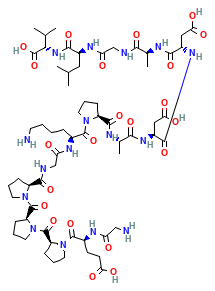
BPC-157
Pentadecapeptide. Gastric pentadecapeptide research.
CAS 137525-51-0
Ships in 3–5 days5mg vial · In stock
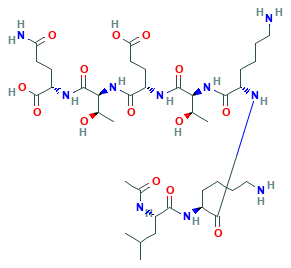
TB-500
Thymosin β4 fragment. Actin-binding domain active.
CAS 885340-08-9
Ships in 3–5 days5mg vial · In stock
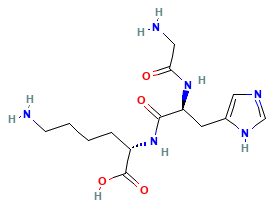
GHK-Cu
Copper tripeptide-1. Tissue regeneration studies.
CAS 49557-75-7
Ships in 3–5 days50mg vial · In stock
Bacteriostatic Water
0.9% benzyl alcohol, sterile USP-grade solvent.
CAS 7732-18-5
Ships in 1–2 days10mL vial · In stock
Sterile Empty Vials
10mL Type-I borosilicate, sterile, ready to use.
10mL vial, flip-off seal
Ships in 1–2 days25 vials/tray · In stock
For laboratory research use only