Semax vs Selank: Two Heptapeptides Compared
Research compounds for laboratory use only · not medical advice
By Vyroval Research Desk — an institutional byline. PubMed-linked sources are checked against their indexed records; how this desk works.
ACTH-fragment lineage versus tuftsin lineage — how Semax and Selank differ in sequence origin, signaling focus (BDNF vs cytokine/GABA), and where each is used as a CNS reference peptide.
Sold as a pair since the 2010s, studied as siblings since the 1980s — Semax and Selank come out of the same Russian peptide-stabilization program but answer to different parent molecules.
Side by side
| Semax | Selank | |
|---|---|---|
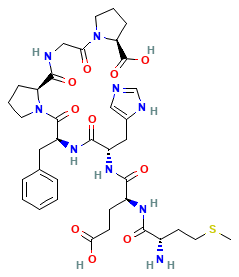
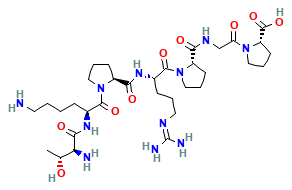
| Sequence | Met-Glu-His-Phe-Pro-Gly-Pro | Thr-Lys-Pro-Arg-Pro-Gly-Pro |
| Parent fragment | ACTH 4-10 (hormone fragment) | Tuftsin (immune tetrapeptide) + extension |
| Approx. MW | ≈ 814 g/mol | ≈ 752 g/mol |
| Primary research lane | BDNF signaling, cognitive-plasticity models | Anxiolytic modulation, cytokine balance |
| Vial form (our catalog) | 1 mg / 5 mg lyophilized | 1 mg / 5 mg lyophilized |
The full mechanics of each are in their guides: Semax and Selank.
The design trick they share
Both natural fragments — an ACTH piece and an immune tetrapeptide — were enzymatically short-lived. The program’s move was surgical: keep the pharmacophore, edit the edges, re-test stability. That’s why both read as “heptapeptide + something”: Semax extends the 4-10 core; Selank appends Pro-Gly-Pro onto tuftsin. For vial math they behave like any lyophilized peptide — reconstitution calculator, molar conversions in the MW calculator.
Choosing between them in a panel
Cognitive-endpoint batteries reach for Semax; anxiety/stress-axis and immunomodulation batteries reach for Selank; panels that assay both lanes run both — they are not interchangeable, and the reason is written into their sequences. If the question is sleep-axis rather than either of these, the third Russian favorite in that slot is DSIP.
References: Kopylova L.A. et al., “Synthetic Peptide Analog of ACTH4-10 and Semax… (Review).” Russian Journal of Bioorganic Chemistry, 2019 · Site profiles: Semax guide, Selank guide.
For laboratory research use only. Not medical advice.
FAQ
Frequently asked questions
What is the core difference between Semax and Selank?
Origin and signaling lane. Semax is an ACTH 4-10 fragment analog studied mainly in BDNF/cognitive-plasticity models; Selank embeds the immune tetrapeptide tuftsin and is studied in anxiety-modulation and cytokine-balance models. Both are synthetic heptapeptides from the same Russian program.
Same dose, same results?
No — published research protocols treat them as separate instruments; the weight ranges overlap, the endpoints do not. Cognitive panels sometimes run both, which is why vendors sell them as a pair.
Which one is 'the nootropic'?
Semax — its literature consistently centers on learning/memory task models and BDNF-dependent plasticity. Selank's center of gravity is anxiolytic and immunomodulatory endpoints.
Are they the same family as ACTH or tuftsin?
Each is a stabilized analog of a different endogenous peptide: Semax of ACTH(4-10), Selank of tuftsin with a C-terminal extension. The stabilizing edits are what turned two short-lived natural fragments into research compounds with workable profiles.
References
Selected literature for the compounds discussed
These papers are background literature on the compounds referenced above — they are not citations of this article.
- [1]Dolotov O.V., et al. "Semax, an analog of ACTH(4-10) with cognitive effects, regulates BDNF and trkB expression in the rat hippocampus." Brain Res, 2006.
- [2]Medvedev V.E., et al. "[A comparison of the anxiolytic effect and tolerability of selank and phenazepam in the treatment of anxiety disorders]." Zh Nevrol Psikhiatr Im S S Korsakova, 2014.
- [3]Schoenenberger G.A., Monnier M. "Characterization of a delta-electroencephalogram(-sleep)-inducing peptide." Proceedings of the National Academy of Sciences, 1977.
- [4]Tukhovskaya E.A., et al. "Delta Sleep-Inducing Peptide Recovers Motor Function in SD Rats after Focal Stroke." Molecules, 2021.
- [5]Lipton J.M., et al. "Antipyretic and anti-inflammatory lys-pro-val compositions." U.S. Patent 5,157,023, 1992.
- [6]Xiao B., et al. "Orally Targeted Delivery of Tripeptide KPV via Hyaluronic Acid-Functionalized Nanoparticles Efficiently Alleviates Ulcerative Colitis." Mol Ther, 2017.
Keep reading
Related articles
BPC-157 vs TB-500: Two Repair-Pathway Peptides Compared
Mechanism, molecular weight, reconstitution and research applications of BPC-157 (5 mg) and TB-500 (5 mg), the two most-asked-about repair peptides.
GHK-Cu vs BPC-157: Copper Peptide vs Pentadecapeptide
Two tissue-focused peptides from different worlds — copper complex vs gastric pentadecapeptide, 50 mg vs 5 mg vial, and how each is studied.
DSIP: Delta Sleep-Inducing Peptide Research Profile
DSIP, the nonapeptide isolated from cerebral blood, and its research in sleep-wake regulation, stress-response and neuropeptide signaling studies.
Laboratory tools
Put it into practice
From the catalog
Reference compounds
Semax
Nootropic heptapeptide. ACTH 4-10 analog.
CAS 80714-61-0
Ships in 3–5 days10mg vial · In stock
Selank
Anxiolytic heptapeptide analog of tuftsin.
CAS 129954-34-3
Ships in 3–5 days10mg vial · In stock
DSIP
Delta sleep-inducing peptide. Nonapeptide.
CAS 34461-88-6
Ships in 3–5 days10mg vial · In stock
KPV
Anti-inflammatory tripeptide (Lys-Pro-Val). α-MSH fragment.
CAS 67727-97-3
Ships in 3–5 days10mg vial · In stock
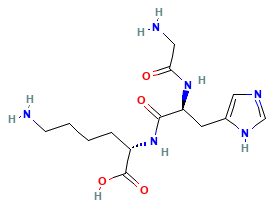
GHK-Cu
Copper tripeptide-1. Tissue regeneration studies.
CAS 49557-75-7
Ships in 3–5 days50mg vial · In stock
For laboratory research use only