BPC-157 Mechanism of Action: Repair Pathways
Research compounds for laboratory use only · not medical advice
By Vyroval Research Desk — an institutional byline. PubMed-linked sources are checked against their indexed records; how this desk works.
Angiogenesis, nitric-oxide modulation, fibroblast activity and GI mucosal protection — the mechanisms behind BPC-157's tissue-repair research profile.
BPC-157 — Body Protection Compound-157 — is a stable gastric pentadecapeptide derived from a protein isolated from human gastric juice. Its 15-residue sequence (Gly-Glu-Pro-Pro-Pro-Gly-Lys-Pro-Ala-Asp-Asp-Ala-Gly-Leu-Val) is remarkably resistant to degradation, which is one reason it became a fixture in tissue-repair research.
The repair pathways studied
| Pathway | What is studied |
|---|---|
| Angiogenesis | New blood-vessel formation, wound and tendon vascularization |
| Nitric-oxide modulation | eNOS / NO pathway effects on endothelium |
| Fibroblast activity | Tendon and ligament fibroblast proliferation and migration |
| GI mucosal protection | Ulcer healing, intestinal barrier models |
| Growth-hormone axis | Reports of GH release modulation in animal models |
Why the pentadecapeptide design matters
Most peptides are degraded in minutes in biological fluids. BPC-157’s short, stable sequence survives gastric juice — a property that made it the focus of gastrointestinal research before the wider tissue-repair interest. That same stability is convenient in the lab: lyophilized powder stored at -20°C, reconstituted with bacteriostatic water when needed.
Research context
The evidence base is almost entirely preclinical — rodent and in vitro models of tendon repair, gut ulcer healing, and angiogenesis. The July 2026 FDA advisory recommendation of BPC-157 for the 503A Bulks List (see BPC-157 and the 503A Bulks List) reflects its research prominence, not clinical approval.
Reference data
CAS 137525-51-0 · C62H98N16O22 · MW 1419.5 · 99.5% purity · 5 mg lyophilized vial
See BPC-157 research profile, the BPC-157 + TB-500 blend, and compare with TB-500’s actin-binding mechanism.
Last updated September 9, 2026
FAQ
Frequently asked questions
What is BPC-157?
BPC-157 is a stable gastric pentadecapeptide (15 amino acids, 1419.5 g/mol) derived from a protein found in human gastric juice.
What are the main mechanisms studied for BPC-157?
Angiogenesis (blood-vessel formation), nitric-oxide pathway modulation, tendon and ligament fibroblast activity, and gastrointestinal mucosal protection.
Does BPC-157 have FDA approval?
No. It is an investigational research peptide with a preclinical-only evidence base; the July 2026 PCAC recommendation concerns the 503A compounding list, not approval.
What form does research BPC-157 ship in?
Lyophilized powder in a 5 mg vial (10 vials per box), stored at -20°C and reconstituted with bacteriostatic water.
References
Selected literature for the compounds discussed
These papers are background literature on the compounds referenced above — they are not citations of this article.
- [1]Sikiric P., et al. "Pentadecapeptide BPC 157 and the stomach." Journal of Physiology (Paris), 1993.
- [2]Sikiric P., et al. "Stable gastric pentadecapeptide BPC 157: novel therapy in gastrointestinal tract damage." Current Pharmaceutical Design, 2011.
- [3]Kleinman H.K., et al. "Thymosin β4 accelerates wound healing." Journal of Investigative Dermatology, 2000.
- [4]Biçer O., et al. "Effects of BPC-157 and TB-500 on Achilles tendon healing in rats: A histopathological and biomechanical study." Jt Dis Relat Surg, 2026.
- [5]Sosne G., et al. "Thymosin beta4: a potential novel therapy for neurotrophic keratopathy." Expert Opinion on Biological Therapy, 2004.
- [6]Pickart L., Thaler M.M. "Tripeptide in human serum which prolongs survival of normal liver cells and stimulates growth in neoplastic liver." Nature, 1973.
Keep reading
Related articles
BPC-157 and the 503A Bulks List: July 2026
BPC-157 was recommended for the FDA 503A Bulks List in July 2026 — what the vote means, what it doesn't change, and the research status of the pentadecapeptide.
TB-500 Mechanism: Thymosin Beta-4 Fragment
How TB-500's conserved actin-binding (LKKTETQ) domain drives the cell-migration and tissue-repair mechanisms studied in research.
BPC-157: The Complete Research Reference
Identity, stability, reconstitution arithmetic, the published animal models, and where the evidence stops — a single entry point to every BPC-157 page in the journal.
Laboratory tools
Put it into practice
From the catalog
Reference compounds
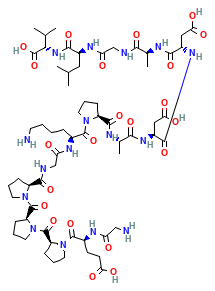
BPC-157
Pentadecapeptide. Gastric pentadecapeptide research.
CAS 137525-51-0
Ships in 3–5 days5mg vial · In stock
BPC-157 + TB-500 Blend
BPC-157 5mg + TB-500 5mg pre-mixed blend. Canonical tissue-repair combination.
Lyophilized powder
Ships in 5–7 days10mg blend vial · In stock
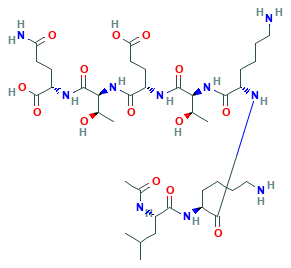
TB-500
Thymosin β4 fragment. Actin-binding domain active.
CAS 885340-08-9
Ships in 3–5 days5mg vial · In stock
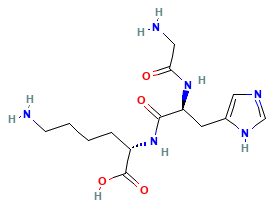
GHK-Cu
Copper tripeptide-1. Tissue regeneration studies.
CAS 49557-75-7
Ships in 3–5 days50mg vial · In stock
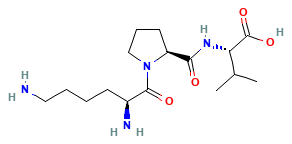
KPV
Anti-inflammatory tripeptide (Lys-Pro-Val). α-MSH fragment.
CAS 67727-97-3
Ships in 3–5 days10mg vial · In stock
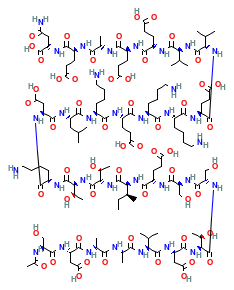
Thymosin Alpha-1
Immunomodulatory 28aa thymic peptide.
CAS 62304-98-7
Ships in 3–5 days10mg vial · In stock
For laboratory research use only