GHK-Cu: The Copper Tripeptide, from Structure to Vial Math
Research compounds for laboratory use only · not medical advice
By Vyroval Research Desk — an institutional byline. PubMed-linked sources are checked against their indexed records; how this desk works.
What GHK-Cu is, what the copper atom changes, how the 50 mg vial reconstitutes, and why its molecular weight matters for molar work.
GHK-Cu is one of the smallest peptides in the catalog — three amino acids plus a copper ion. Researchers usually come to it for one of two reasons: the copper biochemistry, or the reconstitution math on a 50 mg vial. This guide covers both.
What the molecule is
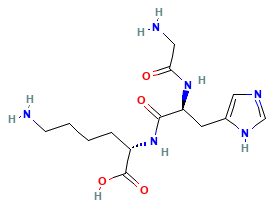
GHK-Cu is the copper complex of glycine-histidine-lysine, a tripeptide first identified in human blood plasma. The full complex formula is C₁₄H₂₄N₆O₄Cu — and that copper atom is not decorative. The literature treats GHK and GHK-Cu as distinct subjects: the copper complex is the one referenced in fibroblast activity, collagen synthesis, and wound-repair pathway models.
The molecular weight works out to about 403.9 g/mol. It’s small, which matters when a protocol specifies molar concentrations — the calculator handles the formula directly.
Reconstituting the 50 mg vial
The 50 mg vial is the largest lyophilized peptide we carry, and that changes the numbers people expect:
- 50 mg = 50,000 µg
- With 2 mL bacteriostatic water: 25,000 µg/mL — each 0.1 mL holds 2,500 µg
- A 1,000 µg target dose = 40 µL = 4 units on a U-100 syringe
- With 5 mL water: 10,000 µg/mL, and the same 1,000 µg dose = 100 µL = 10 units
The reconstitution calculator has the GHK-Cu preset at 50 mg, so no mental math needed — but running it both ways is a good habit for double-checking lab work.
Regulatory status (2026)
GHK-Cu has the most turbulent file in the catalog: nominated, placed on the 503A Category 2 safety-risk list, and by April 2026 removed from both categorical lists — outside Category 1 and Category 2 while the FDA re-evaluates its compounding applications, with a February 2027 PCAC review on the calendar. Topical and injectable research contexts carry different regulatory weight. Track the queue in the 2026 regulatory timeline.
Practical handling
Lyophilized GHK-Cu stores at −20 °C; reconstituted solutions go in the refrigerator and follow the Certificate of Analysis window. The copper can tint a solution faintly blue at higher concentrations — a harmless physical property, not a sign of degradation, though it’s worth knowing so it doesn’t surprise a protocol log.
See GHK-Cu for purity (99.7%) and full specifications.
For laboratory research use only. Not medical advice.
Last updated September 9, 2026
FAQ
Frequently asked questions
What is GHK-Cu exactly?
GHK-Cu (copper tripeptide-1) is the naturally occurring copper complex of the glycine-histidine-lysine tripeptide, studied in fibroblast activity, collagen synthesis and wound-repair models.
How do I reconstitute the 50 mg vial?
The 50 mg vial works like any lyophilized peptide: add bacteriostatic water, divide by volume for concentration. 2 mL gives 25,000 µg/mL; a 1,000 µg dose is 40 µL (4 units on U-100).
Why is the copper important?
The copper ion is part of the peptide's reported activity profile — the tripeptide without copper (GHK) behaves differently in the literature, which is why the complex is specified.
References
Selected literature for the compounds discussed
These papers are background literature on the compounds referenced above — they are not citations of this article.
- [1]Pickart L., Thaler M.M. "Tripeptide in human serum which prolongs survival of normal liver cells and stimulates growth in neoplastic liver." Nature, 1973.
- [2]Pickart L. "The human tri-peptide GHK and tissue remodeling." Journal of Biomaterials Science, Polymer Edition, 2008.
- [3]Kleinman H.K., et al. "Thymosin β4 accelerates wound healing." Journal of Investigative Dermatology, 2000.
- [4]Sosne G., et al. "Thymosin beta4: a potential novel therapy for neurotrophic keratopathy." Expert Opinion on Biological Therapy, 2004.
- [5]Sikiric P., et al. "Pentadecapeptide BPC 157 and the stomach." Journal of Physiology (Paris), 1993.
- [6]Sikiric P., et al. "Stable gastric pentadecapeptide BPC 157: novel therapy in gastrointestinal tract damage." Current Pharmaceutical Design, 2011.
Keep reading
Related articles
GHK-Cu Reconstitution Math: 50 mg Vial
GHK-Cu (CU50) vial math — reconstituting a 50 mg copper tripeptide vial, mg to mL conversions, and the concentrations used in cell-culture work.
KPV vs BPC-157: Tripeptide vs Pentadecapeptide
Comparing KPV (Lys-Pro-Val) and BPC-157 — two peptide research directions for inflammation and tissue repair, and how their mechanisms differ.
TB-500: The Thymosin Beta-4 Fragment, Explained
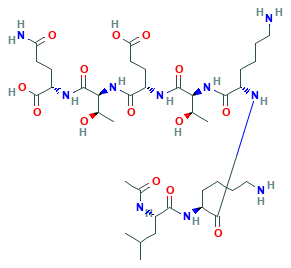
What TB-500 is, what the actin-binding domain does, and how the 5 mg vial reconstitutes — a practical research reference.
Laboratory tools
Put it into practice
From the catalog
Reference compounds
GHK-Cu
Copper tripeptide-1. Tissue regeneration studies.
CAS 49557-75-7
Ships in 3–5 days50mg vial · In stock
TB-500
Thymosin β4 fragment. Actin-binding domain active.
CAS 885340-08-9
Ships in 3–5 days5mg vial · In stock
BPC-157
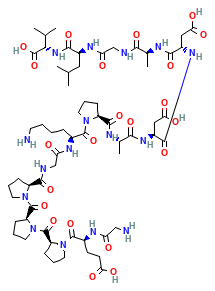
Pentadecapeptide. Gastric pentadecapeptide research.
CAS 137525-51-0
Ships in 3–5 days5mg vial · In stock
KPV
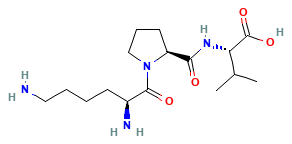
Anti-inflammatory tripeptide (Lys-Pro-Val). α-MSH fragment.
CAS 67727-97-3
Ships in 3–5 days10mg vial · In stock
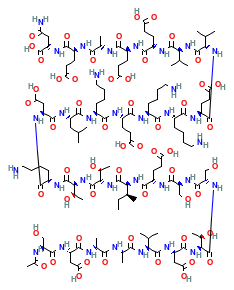
Thymosin Alpha-1
Immunomodulatory 28aa thymic peptide.
CAS 62304-98-7
Ships in 3–5 days10mg vial · In stock
For laboratory research use only