GHK-Cu Reconstitution Math: 50 mg Vial
Research compounds for laboratory use only · not medical advice
By Vyroval Research Desk — an institutional byline. PubMed-linked sources are checked against their indexed records; how this desk works.
GHK-Cu (CU50) vial math — reconstituting a 50 mg copper tripeptide vial, mg to mL conversions, and the concentrations used in cell-culture work.
GHK-Cu (copper tripeptide-1) is the copper-bound form of the GHK peptide — the version studied in tissue-regeneration and collagen-synthesis research. It ships as a lyophilized 50 mg vial (10 vials per box), and the reconstitution math follows the same rules as any peptide vial.
Reconstitution table
| Water added | Stock concentration | 100 mcg | 250 mcg | 500 mcg |
|---|---|---|---|---|
| 1 mL | 50 mg/mL | 2 µL | 5 µL | 10 µL |
| 2 mL | 25 mg/mL | 4 µL | 10 µL | 20 µL |
| 5 mL | 10 mg/mL | 10 µL | 25 µL | 50 µL |
Use bacteriostatic water (0.9% benzyl alcohol). GHK-Cu dissolves readily in water — roll the vial gently, no shaking needed.
Cell-culture notes
GHK-Cu is typically studied at low micromolar working concentrations. The molar weight to remember: 403.9 g/mol for the copper complex — so 403.9 µg/mL ≈ 1 mM. From a 25 mg/mL stock, a 1 mM working solution is a ~1:62 dilution. Use the molecular weight calculator for exact conversions.
The copper makes the difference
| Form | Formula | MW |
|---|---|---|
| GHK (free peptide) | C14H22N6O4 | 340.4 g/mol |
| GHK-Cu (copper complex) | C14H24N6O4Cu | 403.9 g/mol |
The copper coordination is the biologically relevant form for collagen and glycosaminoglycan synthesis studies — which is why the GLOW blend pairs GHK-Cu with BPC-157 and TB-500 in a single 70 mg research vial.
Reference data
CAS 49557-75-7 · C14H24N6O4Cu · MW 403.9 · 50 mg lyophilized vial · 99.7% purity · -20°C storage
See also GHK-Cu research profile, GHK-Cu vs BPC-157, and the reconstitution calculator.
Last updated September 9, 2026
FAQ
Frequently asked questions
How do I reconstitute a 50 mg GHK-Cu vial?
Add 2 mL of bacteriostatic water for a 25 mg/mL stock, or 1 mL for 50 mg/mL. GHK-Cu dissolves readily; roll gently.
What concentrations of GHK-Cu are used in cell culture?
Copper tripeptide is commonly studied at low micromolar concentrations; a 25 mg/mL stock can be diluted to working ranges in culture media.
What is GHK-Cu's molecular weight?
403.9 g/mol for the copper complex (C14H24N6O4Cu); the free peptide is 340.4 g/mol.
How should GHK-Cu be stored?
Lyophilized at -20°C; reconstituted solutions refrigerated and used within the bacteriostatic water's multi-use window.
References
Selected literature for the compounds discussed
These papers are background literature on the compounds referenced above — they are not citations of this article.
- [1]Pickart L., Thaler M.M. "Tripeptide in human serum which prolongs survival of normal liver cells and stimulates growth in neoplastic liver." Nature, 1973.
- [2]Pickart L. "The human tri-peptide GHK and tissue remodeling." Journal of Biomaterials Science, Polymer Edition, 2008.
- [3]Sikiric P., et al. "Stable gastric pentadecapeptide BPC 157: novel therapy in gastrointestinal tract damage." Current Pharmaceutical Design, 2011.
- [4]Sikiric P., et al. "Pentadecapeptide BPC 157 and the stomach." Journal of Physiology (Paris), 1993.
- [5]Kleinman H.K., et al. "Thymosin β4 accelerates wound healing." Journal of Investigative Dermatology, 2000.
- [6]Sosne G., et al. "Thymosin beta4: a potential novel therapy for neurotrophic keratopathy." Expert Opinion on Biological Therapy, 2004.
Keep reading
Related articles
GHK-Cu: The Copper Tripeptide, from Structure to Vial Math
What GHK-Cu is, what the copper atom changes, how the 50 mg vial reconstitutes, and why its molecular weight matters for molar work.
KPV Peptide: The Anti-Inflammatory α-MSH Fragment
KPV (Lys-Pro-Val), the C-terminal tripeptide of α-MSH, and its research profile in cytokine modulation, NF-κB signaling and mucosal integrity studies.
KPV vs BPC-157: Tripeptide vs Pentadecapeptide
Comparing KPV (Lys-Pro-Val) and BPC-157 — two peptide research directions for inflammation and tissue repair, and how their mechanisms differ.
Laboratory tools
Put it into practice
From the catalog
Reference compounds
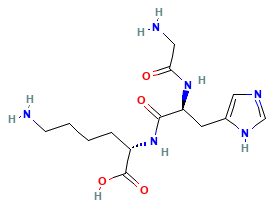
GHK-Cu
Copper tripeptide-1. Tissue regeneration studies.
CAS 49557-75-7
Ships in 3–5 days50mg vial · In stock
GLOW Blend (BPC-157 + GHK-Cu + TB-500)
BPC-157 10mg + GHK-Cu 50mg + TB-500 10mg. Skin and structural-repair research blend.
Lyophilized powder
Ships in 5–7 days70mg blend vial · In stock
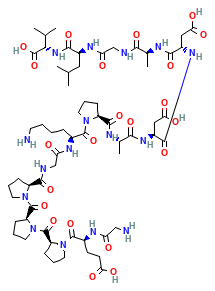
BPC-157
Pentadecapeptide. Gastric pentadecapeptide research.
CAS 137525-51-0
Ships in 3–5 days5mg vial · In stock
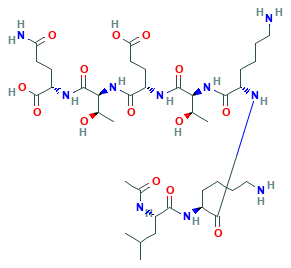
TB-500
Thymosin β4 fragment. Actin-binding domain active.
CAS 885340-08-9
Ships in 3–5 days5mg vial · In stock
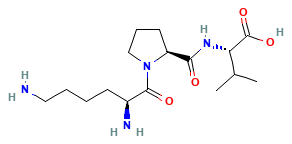
KPV
Anti-inflammatory tripeptide (Lys-Pro-Val). α-MSH fragment.
CAS 67727-97-3
Ships in 3–5 days10mg vial · In stock
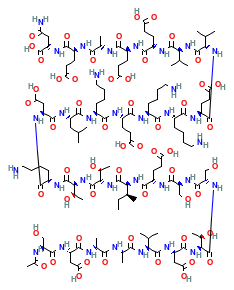
Thymosin Alpha-1
Immunomodulatory 28aa thymic peptide.
CAS 62304-98-7
Ships in 3–5 days10mg vial · In stock
For laboratory research use only