KPV Peptide: The Anti-Inflammatory α-MSH Fragment
Research compounds for laboratory use only · not medical advice
By Vyroval Research Desk — an institutional byline. PubMed-linked sources are checked against their indexed records; how this desk works.
KPV (Lys-Pro-Val), the C-terminal tripeptide of α-MSH, and its research profile in cytokine modulation, NF-κB signaling and mucosal integrity studies.
KPV is what happens when a much larger signaling molecule is trimmed down to the three residues that do the anti-inflammatory work. It is the C-terminal tripeptide of α-melanocyte-stimulating hormone, and it is studied precisely because it separates the anti-inflammatory arm of α-MSH from the melanotropic arm.
The molecule
KPV is the sequence Lys-Pro-Val (C₁₆H₃₀N₄O₄, ≈ 342 g/mol) — the last three amino acids of α-MSH. The parent peptide signals through the melanocortin system; KPV on its own is referenced in research for pro-resolution, cytokine-modulating activity tied to NF-κB–associated signaling, while showing no pigmentation pathway engagement.
Why it’s studied
Because KPV keeps the anti-inflammatory profile of α-MSH without the pigment response, it appears in research on:
- Mucosal and epithelial barrier integrity — where local inflammatory tone is the question
- Wound and dermal models — cell migration and local cytokine balance
- Combination formulations — it is one of the three arms in the GLOW and KLOW research blends, alongside BPC-157, GHK-Cu and TB-500
A frequently cited reference is Lipton’s 1992 patent on antipyretic and anti-inflammatory Lys-Pro-Val compositions — one of the earliest documents framing KPV as an independent active sequence rather than an inert fragment.
Handling notes
KPV is supplied lyophilized and reconstituted with bacteriostatic water before use; the reconstitution calculator handles the liquid math. Storage at −20°C lyophilized.
See KPV for CAS, purity and full specifications.
For laboratory research use only. Not medical advice.
Last updated September 9, 2026
FAQ
Frequently asked questions
What is KPV peptide?
KPV is a three-amino-acid peptide (Lys-Pro-Val) that forms the C-terminal fragment of α-melanocyte-stimulating hormone (α-MSH). It retains the parent molecule's anti-inflammatory activity without melanotropic (pigmentation) effects.
What research is KPV used in?
KPV is studied in cytokine-modulation and NF-κB pathway research, epithelial barrier and mucosal integrity models, and wound-healing and dermal regeneration studies.
Is KPV the same as α-MSH?
No. KPV is only the final three residues of α-MSH. It keeps anti-inflammatory signaling but lacks the melanocortin receptor activity that drives pigmentation, which is why it is studied as a focused anti-inflammatory tripeptide.
References
Selected literature for the compounds discussed
These papers are background literature on the compounds referenced above — they are not citations of this article.
- [1]Lipton J.M., et al. "Antipyretic and anti-inflammatory lys-pro-val compositions." U.S. Patent 5,157,023, 1992.
- [2]Xiao B., et al. "Orally Targeted Delivery of Tripeptide KPV via Hyaluronic Acid-Functionalized Nanoparticles Efficiently Alleviates Ulcerative Colitis." Mol Ther, 2017.
- [3]Pickart L. "The human tri-peptide GHK and tissue remodeling." Journal of Biomaterials Science, Polymer Edition, 2008.
- [4]Sikiric P., et al. "Stable gastric pentadecapeptide BPC 157: novel therapy in gastrointestinal tract damage." Current Pharmaceutical Design, 2011.
- [5]Pickart L., Thaler M.M. "Tripeptide in human serum which prolongs survival of normal liver cells and stimulates growth in neoplastic liver." Nature, 1973.
- [6]Kleinman H.K., et al. "Thymosin β4 accelerates wound healing." Journal of Investigative Dermatology, 2000.
Keep reading
Related articles
GHK-Cu Reconstitution Math: 50 mg Vial
GHK-Cu (CU50) vial math — reconstituting a 50 mg copper tripeptide vial, mg to mL conversions, and the concentrations used in cell-culture work.
GLOW & KLOW Blends: What's Inside the Four-Peptide Combos
GLOW (BPC-157 + GHK-Cu + TB-500) and KLOW (GLOW + KPV) — what each blend actually contains, why pre-blending at fixed ratios, and the reconstitution math per component.
GHK-Cu: The Copper Tripeptide, from Structure to Vial Math
What GHK-Cu is, what the copper atom changes, how the 50 mg vial reconstitutes, and why its molecular weight matters for molar work.
Laboratory tools
Put it into practice
From the catalog
Reference compounds
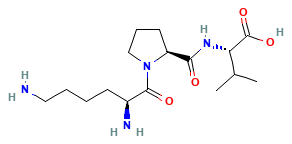
KPV
Anti-inflammatory tripeptide (Lys-Pro-Val). α-MSH fragment.
CAS 67727-97-3
Ships in 3–5 days10mg vial · In stock
GLOW Blend (BPC-157 + GHK-Cu + TB-500)
BPC-157 10mg + GHK-Cu 50mg + TB-500 10mg. Skin and structural-repair research blend.
Lyophilized powder
Ships in 5–7 days70mg blend vial · In stock
KLOW Blend (BPC-157 + GHK-Cu + TB-500 + KPV)
BPC-157 10mg + TB-500 10mg + GHK-Cu 50mg + KPV 10mg. GLOW plus anti-inflammatory KPV.
Lyophilized powder
Ships in 5–7 days80mg blend vial · In stock
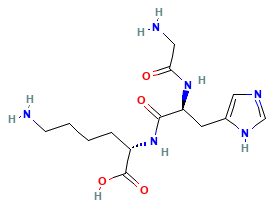
GHK-Cu
Copper tripeptide-1. Tissue regeneration studies.
CAS 49557-75-7
Ships in 3–5 days50mg vial · In stock
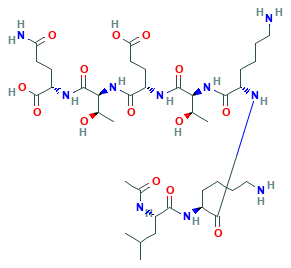
TB-500
Thymosin β4 fragment. Actin-binding domain active.
CAS 885340-08-9
Ships in 3–5 days5mg vial · In stock
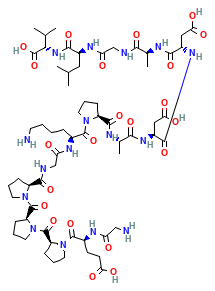
BPC-157
Pentadecapeptide. Gastric pentadecapeptide research.
CAS 137525-51-0
Ships in 3–5 days5mg vial · In stock
For laboratory research use only