KPV vs BPC-157: Tripeptide vs Pentadecapeptide
Research compounds for laboratory use only · not medical advice
By Vyroval Research Desk — an institutional byline. PubMed-linked sources are checked against their indexed records; how this desk works.
Comparing KPV (Lys-Pro-Val) and BPC-157 — two peptide research directions for inflammation and tissue repair, and how their mechanisms differ.
KPV and BPC-157 are often mentioned together because they live in the same corner of peptide research — tissue recovery — but they work through very different designs: a three-amino-acid anti-inflammatory fragment versus a fifteen-amino-acid repair peptide.
The molecules
| KPV | BPC-157 | |
|---|---|---|
| Sequence | Lys-Pro-Val (3 aa) | Pentadecapeptide (15 aa) |
| Origin | C-terminal fragment of α-MSH | Sequence from gastric juice protein |
| MW | ≈ 342 g/mol | ≈ 1419 g/mol |
| Research focus | Inflammatory modulation | Tissue repair / angiogenesis |
KPV: the anti-inflammatory arm
KPV’s research profile centers on NF-κB-associated signaling and cytokine modulation — the inflammatory-tone side of the recovery story. It appears in epithelial barrier and mucosal integrity studies, and its minimal size makes it a focused probe for anti-inflammatory peptide signaling without melanocortin pigmentation activity.
BPC-157: the repair arm
BPC-157’s research is dominated by angiogenesis, tendon and ligament fibroblast activity, and gastrointestinal mucosal protection. It is one of the most-studied peptides in regenerative research, referenced across wound-healing and tissue-repair models.
How they complement each other
Inflammation and repair are two phases of the same tissue response, which is why the two peptides show up together in the GLOW research blend (BPC-157 + GHK-Cu + TB-500) and its KLOW extension with KPV — pairing a repair scaffold with an anti-inflammatory arm for combined regenerative studies.
Handling notes
Both are lyophilized and reconstituted with bacteriostatic water; the reconstitution calculator handles the liquid math.
See KPV and BPC-157 for CAS, purity and full specifications.
For laboratory research use only. Not medical advice.
Last updated September 9, 2026
FAQ
Frequently asked questions
What is the difference between KPV and BPC-157?
KPV is the anti-inflammatory C-terminal tripeptide of α-MSH, studied for cytokine modulation and epithelial barrier support. BPC-157 is a 15-amino-acid pentadecapeptide studied for angiogenesis, tendon fibroblast activity and gastrointestinal mucosa repair.
Are KPV and BPC-157 used together?
They appear together in research blends — the GLOW/KLOW combinations pair BPC-157's repair profile with KPV's anti-inflammatory arm for multi-pathway regenerative studies.
Which is for inflammation and which for repair?
KPV's research focus is inflammatory modulation (NF-κB and cytokine signaling); BPC-157's is structural repair (angiogenesis and tissue regeneration). They are complementary rather than interchangeable.
References
Selected literature for the compounds discussed
These papers are background literature on the compounds referenced above — they are not citations of this article.
- [1]Lipton J.M., et al. "Antipyretic and anti-inflammatory lys-pro-val compositions." U.S. Patent 5,157,023, 1992.
- [2]Xiao B., et al. "Orally Targeted Delivery of Tripeptide KPV via Hyaluronic Acid-Functionalized Nanoparticles Efficiently Alleviates Ulcerative Colitis." Mol Ther, 2017.
- [3]Sikiric P., et al. "Pentadecapeptide BPC 157 and the stomach." Journal of Physiology (Paris), 1993.
- [4]Sikiric P., et al. "Stable gastric pentadecapeptide BPC 157: novel therapy in gastrointestinal tract damage." Current Pharmaceutical Design, 2011.
- [5]Pickart L., Thaler M.M. "Tripeptide in human serum which prolongs survival of normal liver cells and stimulates growth in neoplastic liver." Nature, 1973.
- [6]Pickart L. "The human tri-peptide GHK and tissue remodeling." Journal of Biomaterials Science, Polymer Edition, 2008.
Keep reading
Related articles
GHK-Cu: The Copper Tripeptide, from Structure to Vial Math
What GHK-Cu is, what the copper atom changes, how the 50 mg vial reconstitutes, and why its molecular weight matters for molar work.
GHK-Cu Reconstitution Math: 50 mg Vial
GHK-Cu (CU50) vial math — reconstituting a 50 mg copper tripeptide vial, mg to mL conversions, and the concentrations used in cell-culture work.
TB-500: The Thymosin Beta-4 Fragment, Explained
What TB-500 is, what the actin-binding domain does, and how the 5 mg vial reconstitutes — a practical research reference.
Laboratory tools
Put it into practice
From the catalog
Reference compounds
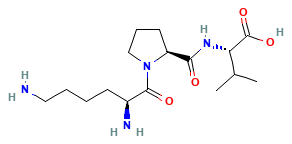
KPV
Anti-inflammatory tripeptide (Lys-Pro-Val). α-MSH fragment.
CAS 67727-97-3
Ships in 3–5 days10mg vial · In stock
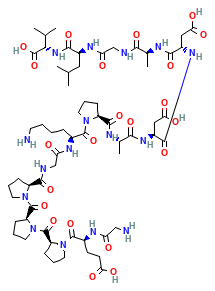
BPC-157
Pentadecapeptide. Gastric pentadecapeptide research.
CAS 137525-51-0
Ships in 3–5 days5mg vial · In stock
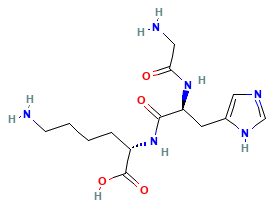
GHK-Cu
Copper tripeptide-1. Tissue regeneration studies.
CAS 49557-75-7
Ships in 3–5 days50mg vial · In stock
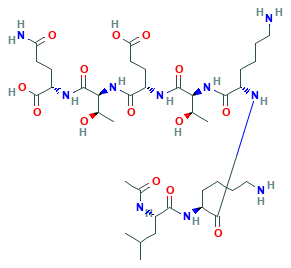
TB-500
Thymosin β4 fragment. Actin-binding domain active.
CAS 885340-08-9
Ships in 3–5 days5mg vial · In stock
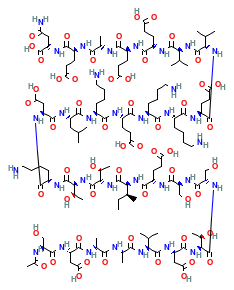
Thymosin Alpha-1
Immunomodulatory 28aa thymic peptide.
CAS 62304-98-7
Ships in 3–5 days10mg vial · In stock
For laboratory research use only