LGD-4033 (Ligandrol): The Human-Trial SARM
Research compounds for laboratory use only · not medical advice
By Vyroval Research Desk — an institutional byline. PubMed-linked sources are checked against their indexed records; how this desk works.
Ligandrol is one of few SARMs with published human-phase data — and that data is precisely what makes it a documentation-first research compound. Chemistry, trial record, and analytical specs.
Chemistry
Ligandrol’s design trades the propionamide scaffolds of first-generation SARMs for a trifluoromethyl-phenyl oxadiazole chemotype — a small, orally available AR ligand (C14H12F6N2O, 338.25 g/mol). The fluorine content is analytically useful: it produces a distinctive LC-MS transition set and renders 19F NMR a clean identity check, which is one reason certification labs favor it as a representative matrix standard.
The trial record — what it says both ways
LGD-4033 is in the narrow group of SARMs with published early-phase human data. Two findings define the literature:
- Engagement. Exogenous administration alters the androgen axis predictably in healthy volunteers — the AR-coregulator recruitment models describe Ligandrol as a probe for tissue selectivity precisely because its human PK is characterized.
- Suppression. The documented dose-dependent decrease in endogenous testosterone is the reason this compound’s research documentation cannot be separated from its pharmacology: a compound that suppresses the axis in trial settings behaves in uncontrolled settings exactly as the anti-doping literature reports.
Neither finding supports therapeutic claims — the program did not advance to approval — but together they make Ligandrol a high-evidence compound relative to most of the SARM catalog, where preclinical-only data (see RAD-140) is the norm. Compare against the class overview in the SARMs research compounds guide.
Analytical spec sheet
| Parameter | Value |
|---|---|
| Formula / MW | C14H12F6N2O / 338.25 g/mol |
| CAS (commonly listed) | 1165910-22-4 |
| Class | Aryl oxadiazole, nonsteroidal SARM |
| Typical assay | HPLC ≥99%, NMR + LC-MS confirmation |
| Solubility | DMSO, ethanol |
| Storage | Room temperature, dry, protected from light |
Given the mislabeling rates in commercial SARM products (JAMA 2017), analytical workflows should treat any unlabeled “Ligandrol” as unverified until its fluorinated signature is confirmed; certified reference material removes the guesswork.
Research use only. Not for human consumption.
FAQ
Frequently asked questions
What is LGD-4033?
Ligandrol, a fluorophenyl oxadiazole-class nonsteroidal SARM developed by Ligand Pharmaceuticals for bone- and muscle-mass indications. C14H12F6N2O, MW 338.25, CAS 1165910-22-4.
Has LGD-4033 been tested in humans?
Yes — early-phase human studies were conducted for bone-density and muscle-wasting endpoints. The published trial record also documents dose-dependent suppression of endogenous testosterone, the class effect that complicates any performance context.
Is it approved?
No. The program did not reach approval, but its phase-I/II data remains among the best-documented human pharmacology for any non-steroidal AR ligand — which is why it's a standard substance in doping-analysis reference panels.
References
Selected literature for the compounds discussed
These papers are background literature on the compounds referenced above — they are not citations of this article.
- [1]Basaria S., et al. "The safety, pharmacokinetics, and effects of LGD-4033, a novel nonsteroidal oral, selective androgen receptor modulator, in healthy young men." J Gerontol A Biol Sci Med Sci, 2013.
- [2]Palmieri C., et al. "Activity and safety of enobosarm, a novel, oral, selective androgen receptor modulator, in androgen receptor-positive, oestrogen receptor-positive, and HER2-negative advanced breast cancer (Study G200802): a randomised, open-label, multicentre, multinational, parallel design, phase 2 trial." Lancet Oncol, 2024.
- [3]Crawford J., et al. "Study Design and Rationale for the Phase 3 Clinical Development Program of Enobosarm, a Selective Androgen Receptor Modulator, for the Prevention and Treatment of Muscle Wasting in Cancer Patients (POWER Trials)." Curr Oncol Rep, 2016.
- [4]Brown A.M., et al. "RAD140 (Testolone) negatively impacts skeletal muscle adaptation, frailty status and mortality risk in female mice." Clin Exp Pharmacol Physiol, 2023.
- [5]Yu Z., et al. "Selective Androgen Receptor Modulator RAD140 Inhibits the Growth of Androgen/Estrogen Receptor-Positive Breast Cancer Models with a Distinct Mechanism of Action." Clin Cancer Res, 2017.
- [6]Solt L.A., et al. "Regulation of circadian behaviour and metabolism by synthetic REV-ERB agonists." Nature, 2012.
Keep reading
Related articles
Andarine (S-4): The First-Generation SARM Standard
Andarine is the molecule that defined the SARM template — and the one whose retinal off-target findings defined the limits of the selectivity claim. Chemistry, detection and handling.
Ostarine (MK-2866): The Prototype SARM, Revisited
Enobosarm is the most studied SARM in the catalog: phase II human data, a single stereocentre that decides what the standard actually is, and a documentation trail worth reading before any assay.
SR-9009: A REV-ERB Agonist, Not a SARM
SR-9009 is shelved with SARMs by vendors and binds no androgen receptor at all. What it actually targets, why its oral exposure is poor, and what the published case report records.
Laboratory tools
Put it into practice
From the catalog
Reference compounds
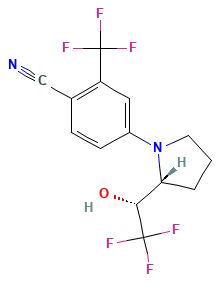
Ligandrol (LGD-4033)
Fluorophenyl oxadiazole-class SARM studied in bone-mass protocols.
CAS 1165910-22-4
Ships in 3–5 days10mg vial · In stock
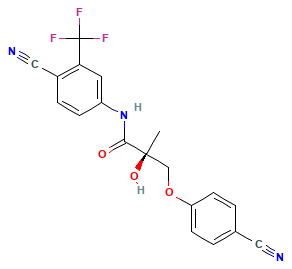
Ostarine (Enobosarm)
Aryl-propionamide SARM reference standard. GTx's phase II compound.
CAS 841205-47-8
Ships in 3–5 days10mg vial · In stock
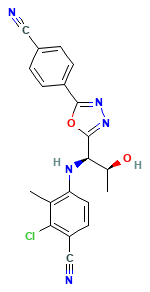
Testolone (RAD-140)
High-affinity benzyl-propionamide SARM from Ligand's preclinical series.
CAS 1182367-47-0
Ships in 3–5 days10mg vial · In stock
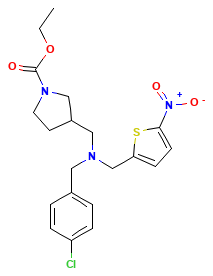
SR-9009 (Stenabolic)
REV-ERB agonist often shelved with SARMs — mechanism is distinct.
CAS 1379686-30-2
Ships in 3–5 days10mg vial · In stock
For laboratory research use only