RAD-140 (Testolone): The Preclinical SARM
Research compounds for laboratory use only · not medical advice
By Vyroval Research Desk — an institutional byline. PubMed-linked sources are checked against their indexed records; how this desk works.
Testolone is the highest-affinity SARM in most published receptor panels — and has zero completed human trials. What preclinical science establishes, what it cannot, and how to spec it analytically.
Chemistry and origin
RAD-140 belongs to Ligand’s second-generation SARM scaffolds: a bicyclic aryl/quinuclidine-adjacent design refined in the 2013 J. Med. Chem. program that produced several tool compounds. Its defining published property is androgen-receptor binding affinity in the sub-nanomolar range across receptor-selectivity assays — the highest recorded in that series — with tissue-anabolic-to-androgenic separation demonstrated in castrated-rat models.
What preclinical data supports — and where it stops
Cell and rodent studies establish: AR agonism with selectivity signatures distinct from testosterone and nandrolone, myocyte anabolic signaling, and SHBG suppression in systemic dosing models. None of this transfers automatically to human physiology, and the absence of trial data is itself information: Ligand advanced other candidates (enobosarm) to the clinic and did not advance RAD-140, which most medicinal-chemistry reviews read as a program decision, not a safety signal with published detail.
For researchers, the legitimate use-cases are the ones human data doesn’t block: receptor pharmacology tool compound, structure-activity comparator, and reference standard in analytical panels. Our SARMs research compounds guide covers the mislabeling literature that drives demand for certified reference material.
Analytical spec sheet
| Parameter | Value |
|---|---|
| IUPAC-lineage | Chloroaryl benzyl-propionamide (Ligand series) |
| Formula / MW | C20H16ClN5O2 / 393.8 g/mol |
| CAS (commonly listed) | 1182367-47-0 |
| Typical assay | HPLC ≥99%, with 1H-NMR and LC-MS confirmation |
| Solubility | DMSO, ethanol; limited water |
| Storage | Room temperature, dry, amber |
The chlorine isotope pattern (M/M+2 ≈ 3:1) makes RAD-140 instantly recognizable in LC-MS screening panels — one reason doping-analysis labs keep it as a standing calibrant. Use the molecular-weight calculator to verify stock concentrations against mass.
Research use only. Not for human consumption. Dosing in any human context is outside the scope of this documentation.
FAQ
Frequently asked questions
What is RAD-140?
Testolone, a chloroaryl benzyl-propionamide SARM from Ligand Pharmaceuticals' preclinical series, characterized in a 2013 Journal of Medicinal Chemistry design-and-synthesis study. C20H16ClN5O2, MW 393.8, CAS 1182367-47-0.
Has RAD-140 been tested in humans?
No completed human trials are published as of 2026. Its biological profile — high AR binding affinity and anabolic signaling — comes from cell and animal models. Head-to-head claims about 'strongest SARM' rest on in-vitro potency rankings, not human outcomes.
Why is it analytically tricky?
RAD-140 is a frequent mislabel subject: Van Wagoner et al. (JAMA 2017) found a large share of SARM products contained unlisted or different compounds. Its LC-MS fragmentation signature is well-characterized, which is exactly why reference-grade material matters for doping-analysis and QC work.
References
Selected literature for the compounds discussed
These papers are background literature on the compounds referenced above — they are not citations of this article.
- [1]Brown A.M., et al. "RAD140 (Testolone) negatively impacts skeletal muscle adaptation, frailty status and mortality risk in female mice." Clin Exp Pharmacol Physiol, 2023.
- [2]Yu Z., et al. "Selective Androgen Receptor Modulator RAD140 Inhibits the Growth of Androgen/Estrogen Receptor-Positive Breast Cancer Models with a Distinct Mechanism of Action." Clin Cancer Res, 2017.
- [3]Palmieri C., et al. "Activity and safety of enobosarm, a novel, oral, selective androgen receptor modulator, in androgen receptor-positive, oestrogen receptor-positive, and HER2-negative advanced breast cancer (Study G200802): a randomised, open-label, multicentre, multinational, parallel design, phase 2 trial." Lancet Oncol, 2024.
- [4]Crawford J., et al. "Study Design and Rationale for the Phase 3 Clinical Development Program of Enobosarm, a Selective Androgen Receptor Modulator, for the Prevention and Treatment of Muscle Wasting in Cancer Patients (POWER Trials)." Curr Oncol Rep, 2016.
- [5]Basaria S., et al. "The safety, pharmacokinetics, and effects of LGD-4033, a novel nonsteroidal oral, selective androgen receptor modulator, in healthy young men." J Gerontol A Biol Sci Med Sci, 2013.
Keep reading
Related articles
Andarine (S-4): The First-Generation SARM Standard
Andarine is the molecule that defined the SARM template — and the one whose retinal off-target findings defined the limits of the selectivity claim. Chemistry, detection and handling.
LGD-4033 (Ligandrol): The Human-Trial SARM
Ligandrol is one of few SARMs with published human-phase data — and that data is precisely what makes it a documentation-first research compound. Chemistry, trial record, and analytical specs.
Ostarine (MK-2866): The Prototype SARM, Revisited
Enobosarm is the most studied SARM in the catalog: phase II human data, a single stereocentre that decides what the standard actually is, and a documentation trail worth reading before any assay.
Laboratory tools
Put it into practice
From the catalog
Reference compounds
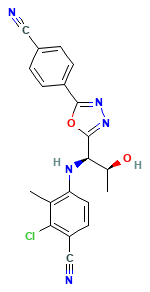
Testolone (RAD-140)
High-affinity benzyl-propionamide SARM from Ligand's preclinical series.
CAS 1182367-47-0
Ships in 3–5 days10mg vial · In stock
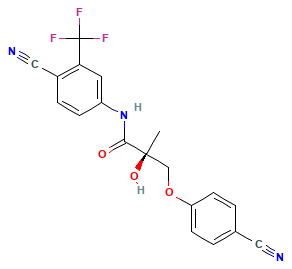
Ostarine (Enobosarm)
Aryl-propionamide SARM reference standard. GTx's phase II compound.
CAS 841205-47-8
Ships in 3–5 days10mg vial · In stock
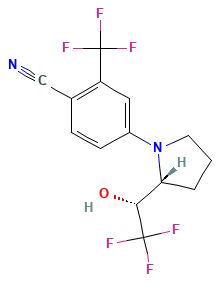
Ligandrol (LGD-4033)
Fluorophenyl oxadiazole-class SARM studied in bone-mass protocols.
CAS 1165910-22-4
Ships in 3–5 days10mg vial · In stock
For laboratory research use only