How to Read a Peptide COA: A Field Guide for Researchers
Research compounds for laboratory use only · not medical advice
By Vyroval Research Desk — an institutional byline. PubMed-linked sources are checked against their indexed records; how this desk works.
Every block on a peptide certificate of analysis, what each assay actually measures, and the eight checks that separate a usable COA from a decorative one — with a worked example.
A COA is one page that can contain three honest numbers or five elegant fictions. Here is how to tell which you’re holding — block by block.
The anatomy of a real certificate
Header — who, what, when. Compound name, CAS, batch/lot code, synthesis or purification date, report date. The batch code must match your vial label exactly; the dates must be chronologically possible. Decorative COAs fail here surprisingly often.
Identity — usually LC-MS or MALDI. Expect an “m/z found vs calculated” pair. For GHK-Cu the found mass should sit near the copper-free peptide’s calculated mass plus the metal adduct — if you can compute expected mass with the MW calculator, you can check their arithmetic in 30 seconds.
Purity — HPLC area%. Read the method: gradient, column class, detection wavelength (214 or 220 nm for peptide bonds). A bare “99%” with no method line is marketing. Peptides with Cys residues, salts, or acetate counter-ions legitimately report lower area% — ask which.
Water and residue content. Lyophilized powder is never 100% solid: 5–10% residual water and TFA/acetate salts are normal. Good COAs report them (Karl Fischer or qNMR notes); the number explains why vial “mass” and pure-peptide mass differ — the exact accounting trap covered in our reconstitution guide.
Sign-off. A lab name, location, and analyst reference that exist when you look them up.
The eight-point checklist
- Batch code matches the vial in your hand
- Found vs calculated mass, both printed
- HPLC method line present (column/gradient/λ)
- Purity consistent with the compound’s difficulty (no universal 99.9%)
- Water/salt content disclosed
- Dates chronologically sane
- Issuing lab identifiable and findable
- Numbers reproducible from your own MW math
Any two of these missing and the document is a sales sheet. Our quality process page states exactly what each Vyroval batch ships with — including what we don’t test for, which is the line most COA marketing quietly omits.
For laboratory research use only. Not medical advice.
FAQ
Frequently asked questions
What is a COA?
A Certificate of Analysis: the per-batch document reporting identity and purity testing for the exact lot being shipped — typically MS or HPLC data with numeric results and instrument method references.
What purity number is realistic for lyophilized research peptides?
98–99.5% on HPLC is normal for well-made crude-purified peptides; claims of >99.5% on every batch of every long peptide are a flag, not a feature — purification recovery realistically varies.
HPLC versus MS: which matters more?
They answer different questions and neither substitutes for the other. MS confirms the molecule's mass; HPLC area% quantifies how much of the dry weight is that molecule. A complete COA carries both.
What is the single most-faked thing on a COA?
Batch-number linkage: a document whose batch code doesn't appear on the vial label, or whose date predates the stated synthesis, is decorative. Cross-check batch, date, and the mass value against your own MW calculation for the sequence.
References
Selected literature for the compounds discussed
These papers are background literature on the compounds referenced above — they are not citations of this article.
- [1]Pickart L., Thaler M.M. "Tripeptide in human serum which prolongs survival of normal liver cells and stimulates growth in neoplastic liver." Nature, 1973.
- [2]Pickart L. "The human tri-peptide GHK and tissue remodeling." Journal of Biomaterials Science, Polymer Edition, 2008.
- [3]Sikiric P., et al. "Pentadecapeptide BPC 157 and the stomach." Journal of Physiology (Paris), 1993.
- [4]Sikiric P., et al. "Stable gastric pentadecapeptide BPC 157: novel therapy in gastrointestinal tract damage." Current Pharmaceutical Design, 2011.
- [5]Teichman S.L., et al. "Prolonged stimulation of growth hormone (GH) secretion by CJC-1295, a long-acting analog of growth hormone-releasing hormone." Clinical Pharmacology & Therapeutics, 2006.
Keep reading
Related articles
BPC-157 Dosage and Reconstitution Math: 5 mg Vial in the Lab
BPC-157 vial math — reconstituting a 5 mg lyophilized vial, mg to mL and U-100 unit conversions, and common research dose ranges.
GHK-Cu: The Copper Tripeptide, from Structure to Vial Math
What GHK-Cu is, what the copper atom changes, how the 50 mg vial reconstitutes, and why its molecular weight matters for molar work.
GHK-Cu Reconstitution Math: 50 mg Vial
GHK-Cu (CU50) vial math — reconstituting a 50 mg copper tripeptide vial, mg to mL conversions, and the concentrations used in cell-culture work.
Laboratory tools
Put it into practice
From the catalog
Reference compounds
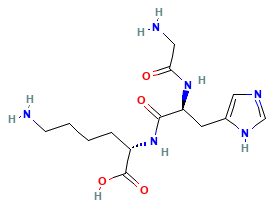
GHK-Cu
Copper tripeptide-1. Tissue regeneration studies.
CAS 49557-75-7
Ships in 3–5 days50mg vial · In stock
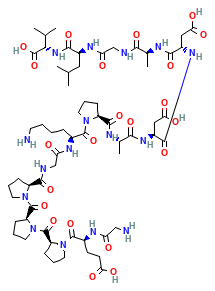
BPC-157
Pentadecapeptide. Gastric pentadecapeptide research.
CAS 137525-51-0
Ships in 3–5 days5mg vial · In stock
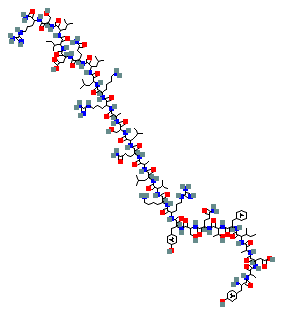
CJC-1295 No DAC
GHRH analog (Mod GRF 1-29). GH secretagogue research.
CAS 863288-34-0
Ships in 3–5 days5mg vial · In stock
For laboratory research use only